


Wattlebewillbe.
Thriive Ecological.
Fauna Asset Account.
Environmental Account ID: AU00107
Account Holder: Thriive Ecological
Purpose: Establish a baseline for woodland bird condition to inform sustainable land management in conjunction with targeted ecological restoration.
Current land use: Conservation
Environmental Asset: Fauna - Woodland Birds
Asset Account ID: AU00107F1
Registration date: 27 July 2025
Baseline Certification date: 04 February 2026
Certification pathway: AfN-Verified
Accredited Expert/s: Misty Neilson & Mark Nadir Runkovski
Asset Account area: 22 ha (100% of property area)
Method: AfN-METHOD-F-02
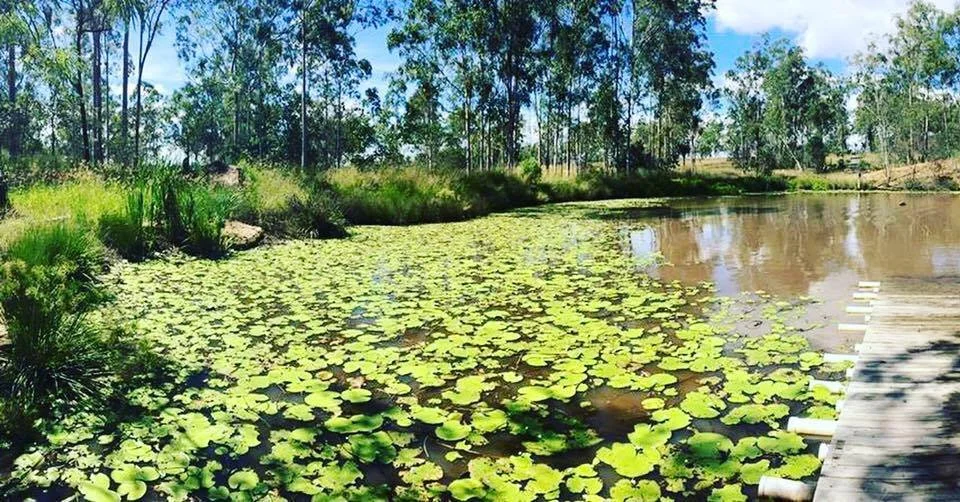
Asset Account snapshot.


Asset Account Econd® summary.

Asset Account statement.
-
27 July 2025 - Registration Date
-
04 February 2026 - Certification Date
Significant outcomes.
The fauna Asset Account covers 22 ha, representing nearly 100% of Wattlebewillbe’s total land area, and is dedicated to conservation and small-scale food production. The baseline Econd® score of 88 was calculated in accordance with AfN-METHOD-F-02. Woodland birds were recorded across two survey sites, with Site 1 achieving a higher Econd® of 92 compared to 82 at Site 2. During the formal survey period, 42 native bird species were recorded, including 12 small-bodied species.
No EPBC-listed or state-listed species were detected during the formal survey. However, several listed species have previously been observed on the property. Following the survey period, an additional 97 native species (not all woodland-dependent) were recorded, bringing the total number of native species observed at Wattlebewillbe to 139. This is twelve more species than recorded in the adjoining Coominglah State Forest and only four fewer than the total recorded within a 10 km radius in the WildNet database.
This exceptionally high level of species richness reflects the property’s strong landscape connectivity, high ecological integrity, and the effectiveness of ongoing conservation management. Wattlebewillbe supports diverse and structurally complex woodland habitats that enable endangered, generalist, and specialist species to persist. The survey demonstrates not only an abundance of woodland birds, but also strong habitat continuity and the positive biodiversity outcomes achieved through more than a decade of targeted conservation management.
Limitations & disclosures.
Single Survey Period
The baseline Econd® score was derived from a single survey period, which introduces uncertainty related to seasonal and temporal variability in bird activity and detectability. One-off surveys can under- or over-represent true species richness depending on weather, seasonality, and resource availability. The survey coincided with mild early-morning conditions that likely supported high bird activity, which may have contributed to the higher-than-expected Econd® score of 88. Repeating surveys across multiple seasons and years would improve confidence and representativeness.
Vegetation Mapping and Spatial Data Accuracy
Vegetation mapping was based on existing GIS datasets that were verified and refined through full-property ground-truthing, resulting in high spatial reliability. While minor spatial inaccuracies are always possible, any misclassification of habitat types is expected to be minimal and unlikely to meaningfully influence the Econd® score or interpretation of results.
Methodological and Ecological Factors
The higher-than-expected Econd® score of 88 may have been influenced by a combination of methodological and ecological factors. The survey timing coincided with optimal seasonal conditions, when early mornings were mild and days not yet hot, potentially representing a “sweet spot” period for bird activity and detectability. Incorporating afternoon survey periods in future assessments may also help to address this limitation. The lead ecologist’s long-term familiarity with the property (over 15 years) may have enhanced detection through greater familiarity with species behaviour, calls, and microhabitats. While this improves precision, it may also inflate observed richness relative to a less experienced or independent observer. Engaging an independent observer of comparable skill to replicate surveys could help to validate future results and reduce observer bias, noting that this may become cost prohibitive.
Edge Effects and Ecotone Influence
Several survey plots occur near ecotones, including riparian margins and transitional habitat zones, which can support elevated species richness due to greater habitat heterogeneity. Site 1, which recorded the highest Econd®, is adjacent to a riparian area, potentially increasing detections. These effects are largely unavoidable and should be considered when interpreting site-level scores.
Monitoring Frequency
Monitoring is currently scheduled annually in spring, which limits seasonal representation of woodland bird condition. Implementing biannual surveys (e.g. adding an autumn survey) and increasing repeat sampling would improve data robustness, trend detection, and long-term confidence in changes to condition.
Last update: 03 March 2026



Environmental Account.
Learn more about the Environmental Account. Environmental Accounts can have one or more Asset Accounts.