


AACo- Natural Capital Vegetation Assessment - Gulf Group.
Australian Agricultural Company (AACo).
Environmental Account.
Environmental Account ID: AU00100
Account Holder: Australian Agricultural Company (AACo)
Location: Various properties across Queensland, Australia
Purpose: To identify, document, and communicate the natural values of AACo properties across Gulf Group, while informing sustainable landscape management
Current land use: Grazing/Cropping
Scale: Aggregate
Total aggregate property area: 2,411,325 ha (across six properties)
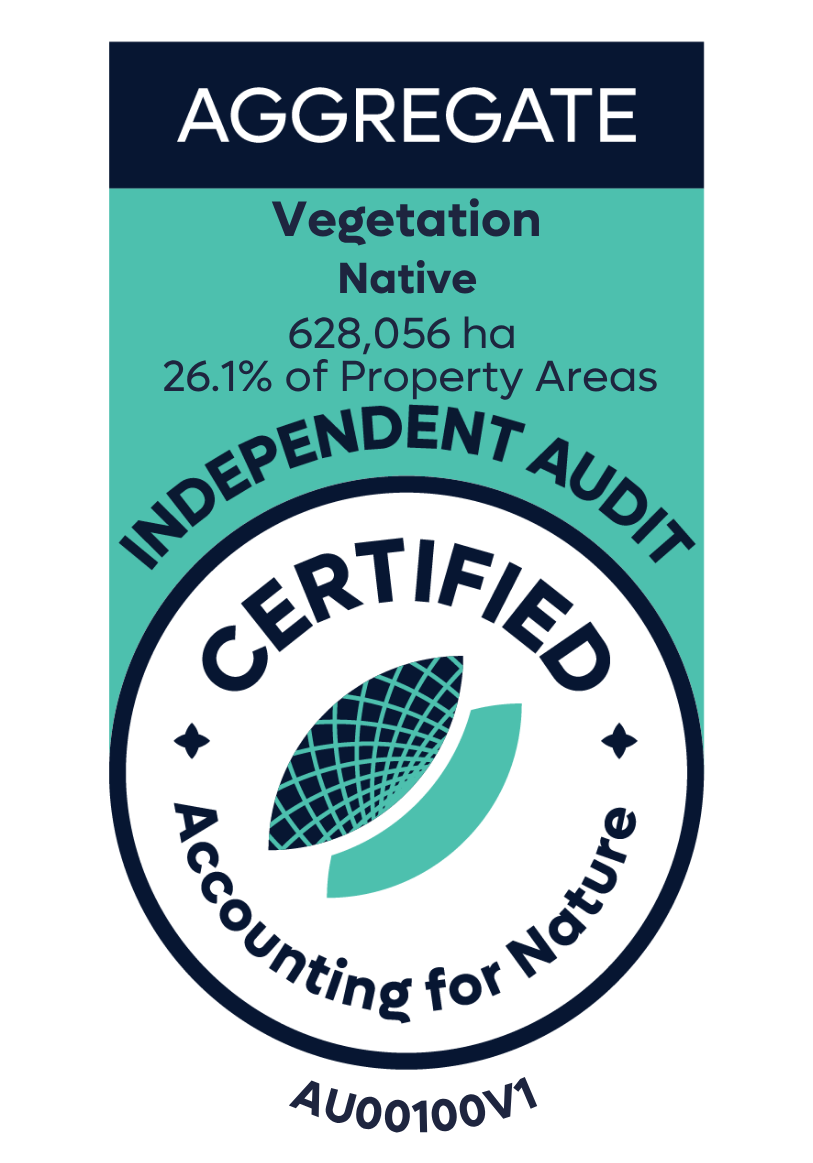
Total Environmental Account area: 628,056 ha (26.1% of total aggregate area)
Environmental Asset Accounts.
Asset Account ID: AU00100V1
Status: Independent Audit (reasonable assurance)
Baseline Certification date: 18 May 2026
Asset Account area: 628,055 ha (26.1% of aggregate property area)
Assets: Vegetation - Native
Method: AfN-METHOD-V-10

Certification Passport.
About the Environmental Account.
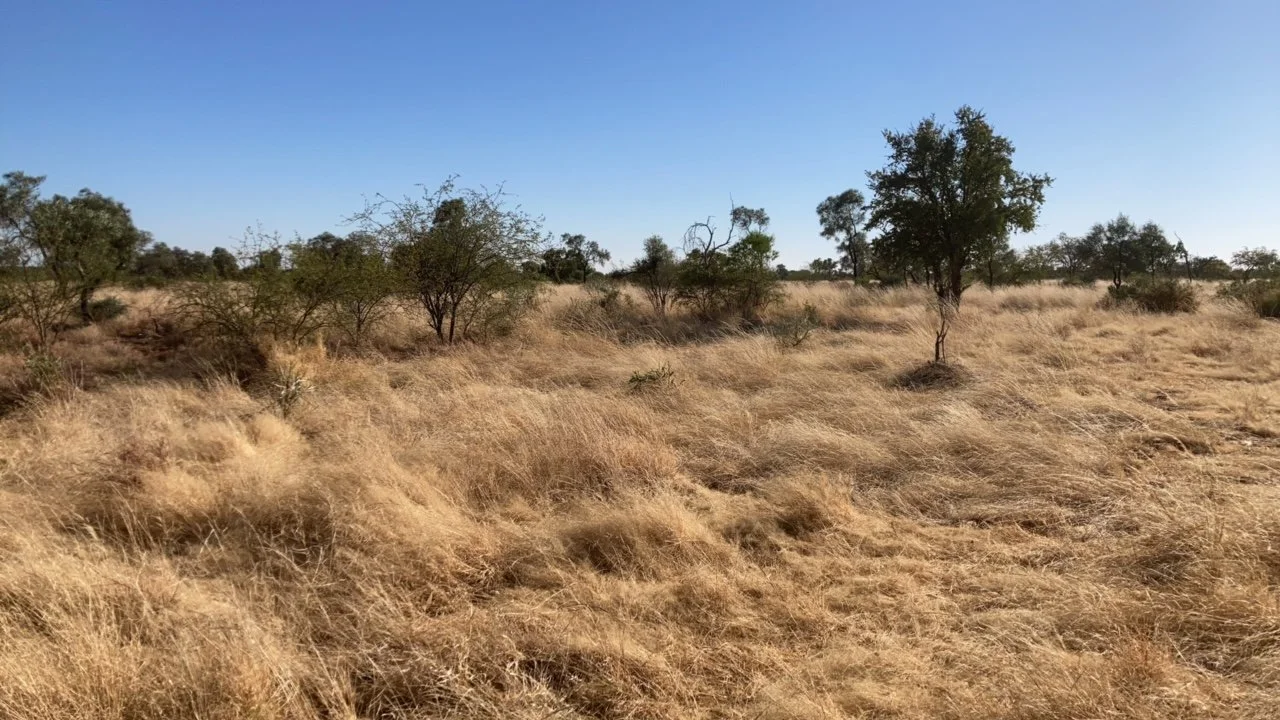
Canobie, Dalgonally and Wondoola are situated in the Gulf Plains bioregion, with vegetation, soil and underlying geology grouped in two characteristic sub-regions, the Donors Plateau and the Wondoola Plains. These properties therefore encompass diverse landscapes featuring a mix of Palatable Tussock grasslands and Seasonal wetlands/lakes that support both cattle grazing and native vegetation.
Canobie comprises a mix of open Mitchell Grass (Astrebla) plains, seasonal wetlands and sandy riverine woodlands, with an approximate area of 437,181 ha. Wondoola shares its southern boundary with Canobie and is a 258,306 ha large, low-relief property dominated by anastomosing channels and black soil floodplains. The region experiences distinct wet and dry seasons, with the wet season transforming the landscape into an expansive, interconnected network of temporary wetlands and waterholes. These wetlands provide critical breeding grounds for migratory birds and native amphibians. Wooded riparian corridors, dominated by Coolabah, Melaleuca and River Red Gum, traverse Wondoola’s floodplains, serving as refugia for wildlife in dry periods.
Dalgonally is a gently undulating property with a number of Regional Ecosystems, reflecting its various landforms and soil types over an area of 128,466 ha. As with the other Gulf properties, the native Astrebla grasses form the basis of productivity, along with a productive mix of other native ‘3P’ grasses and palatable forbs. Much of Dalgonally is naturally treeless plains with most of the shade coming from a handful of tree species, including Coolabahs, River Red Gums, Bauhinias, and Gidyea, often growing along and near to the channels. Despite the lack of shrub and tree cover, a rich diversity of fauna thrives within the cracking black soil areas and is likely to be found in areas of high tussock density, diverse flora assemblages and along watercourses. Some of the endemic species that could be expected here include the Julia Creek dunnart, Spencer’s monitor and Gouldian finch.
Carrum is a typical black soil property located in the Mitchell Grass Downs bioregion. It has a low number of Regional Ecosystems in comparison to many of AACo’s other holdings, due in part to its smaller area of 55,657 ha. These are naturally treeless plains with the only shade provided by Coolabah trees lining the two creek channels that run south to north through the property.
Headingly Station lies across the Mitchell Grass Downs and Northwest Highlands Bioregions with an approximate area of 1,050,506 ha, featuring expansive Mitchell Grass plains, ephemeral wetlands, and wooded creek lines. It is characterized by its broad, undulating plains interspersed with cracking clay soils that sustain productive native pastures. The property is dissected by several watercourses that flow seasonally, providing essential water sources for livestock and wildlife. Despite this, the property remains an important habitat for species such as the kowari, perentie, and Australian bustard. The ephemeral wetlands of Headingly are vital for migratory waterfowl and provide significant ecological services. Seasonal flooding rejuvenates these wetlands, promoting the growth of native sedges and aquatic vegetation, which in turn support a rich assemblage of invertebrates and vertebrate fauna.
Almost half of South Galway lies within the Cooper Creek floodplain, a flat expanse of cracking clay soils supporting bluebush, lignum, and some tussock grasses that typically grow in the ‘gutters,’ swamps, and depressions of the Channel Country Bioregion. After moderate flooding, it is the short-lived forbs and annual grasses that cover much of these land types and provide substantial yields of protein and energy-rich feed for stock. Dotted throughout the floodplain are sand dunes formed during the last glacial period, supporting a diverse array of desert flora. The habitat structures provided by various shrubs, spinifex hummocks, and consolidated sand typically support a range of arid fauna, though the introduction of buffel grass may have substantially altered these ecosystems. River channels and watercourses feed mostly from the northeast of the property, flowing past the Windorah township and out into the floodplain. In dry periods, these watercourses shrink into a series of deep billabongs, the only natural surface water available to wildlife in this landscape. Minor watercourses also drain off the higher ironstone country to the north and west of the homestead, accompanied by creekline woodlands and herblands sparsely covered by short-lived forbs, a small number of perennial grasses, silver cassias, and some low trees.
Annual certification compliance & material disclosures.
No current disclosures relating to this account.
Account location.
About the Account Holder.
The Australian Agricultural Company (AACo) is committed to becoming a leader in sustainable beef production, aiming to balance environmental stewardship with agricultural excellence. Managing approximately 6.5 million hectares across Queensland and the Northern Territory (about 1% of Australia's landmass) AACo oversees a cattle herd of around 455,000 head.
Central to AACo's sustainability efforts is their comprehensive Sustainability Framework, which guides the company's initiatives to drive positive change within the industry and communities. This framework emphasizes the protection and respect of natural resources, aiming to shape agriculture to meet the needs of a changing world.
AACo's sustainability targets are aligned with global efforts to combat climate change and promote responsible land management. The company is dedicated to combating desertification and restoring degraded land and soil, including areas affected by drought and floods.
Through these initiatives, AACo strives to enhance the ecological health of their properties, ensuring that their operations contribute positively to the environment while maintaining the highest standards of beef production.
Last update: 19 May2026