


QNCF Stuarts Creek.
QNCF Stuarts Creek Operations PTY LTD as trustee for QNCF Stuarts Creek Operations Trust
Fauna Asset Account.
Environmental Account ID: AU00088
Account Holder: QNCF Stuarts Creek Operations PTY LTD as trustee for QNCF Stuarts Creek Operations Trust
Purpose: To measure koala populations and habitat condition robustly to guide management and support future biodiversity market opportunities
Current land use: Cattle agistment
Environmental Asset: Fauna - Koala Population and Habitat
Asset Account ID: AU00088F2
Registration date: 28 January 2025
Baseline Certification date: 02 March 2026
Certification pathway: AfN-Verified
Accredited Expert/s: Lucy Healing, Jared Reid, Dr Jeremy Simmonds
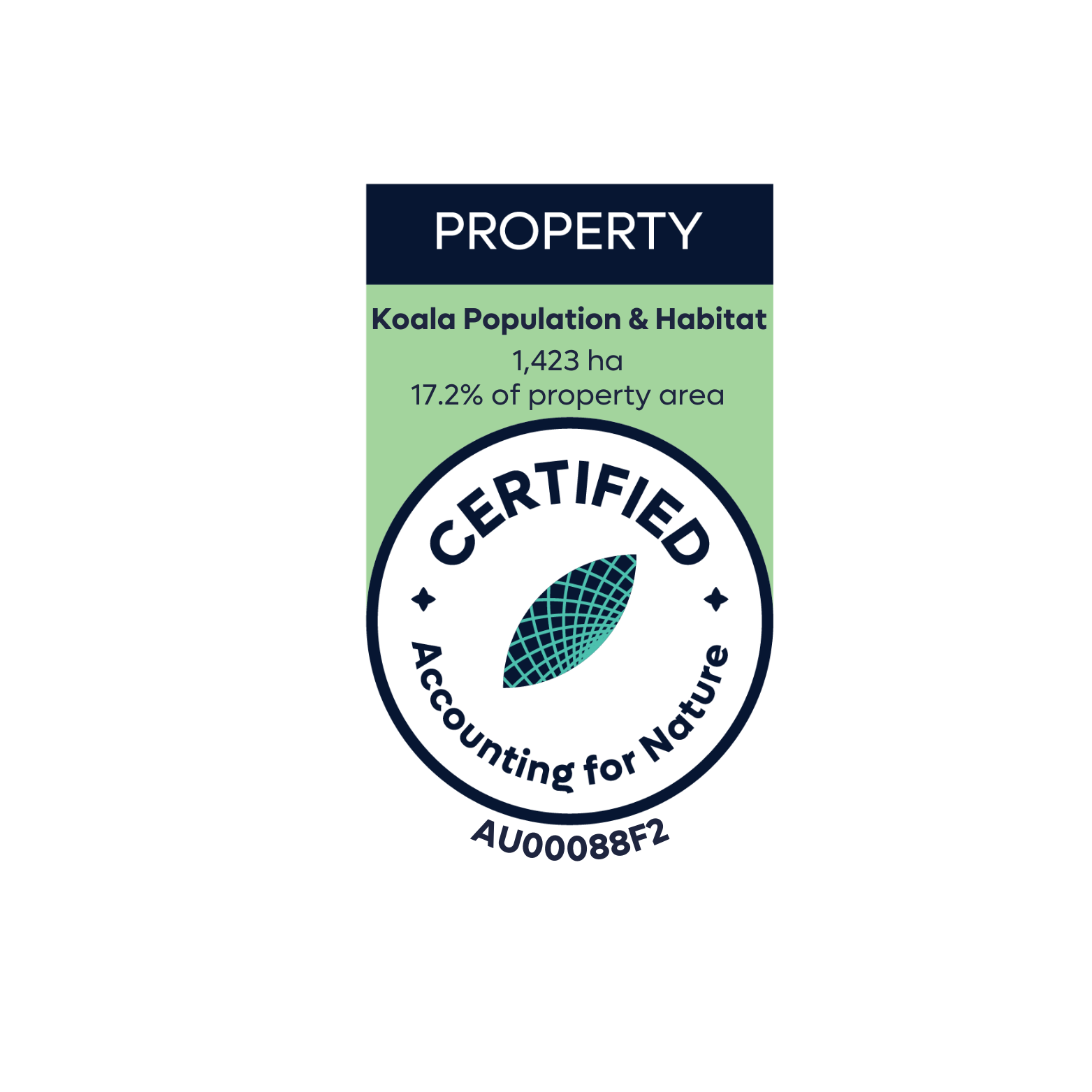
Asset Account area: 1,423 ha (17.2% of property area)
Method: AfN-METHOD-F-04
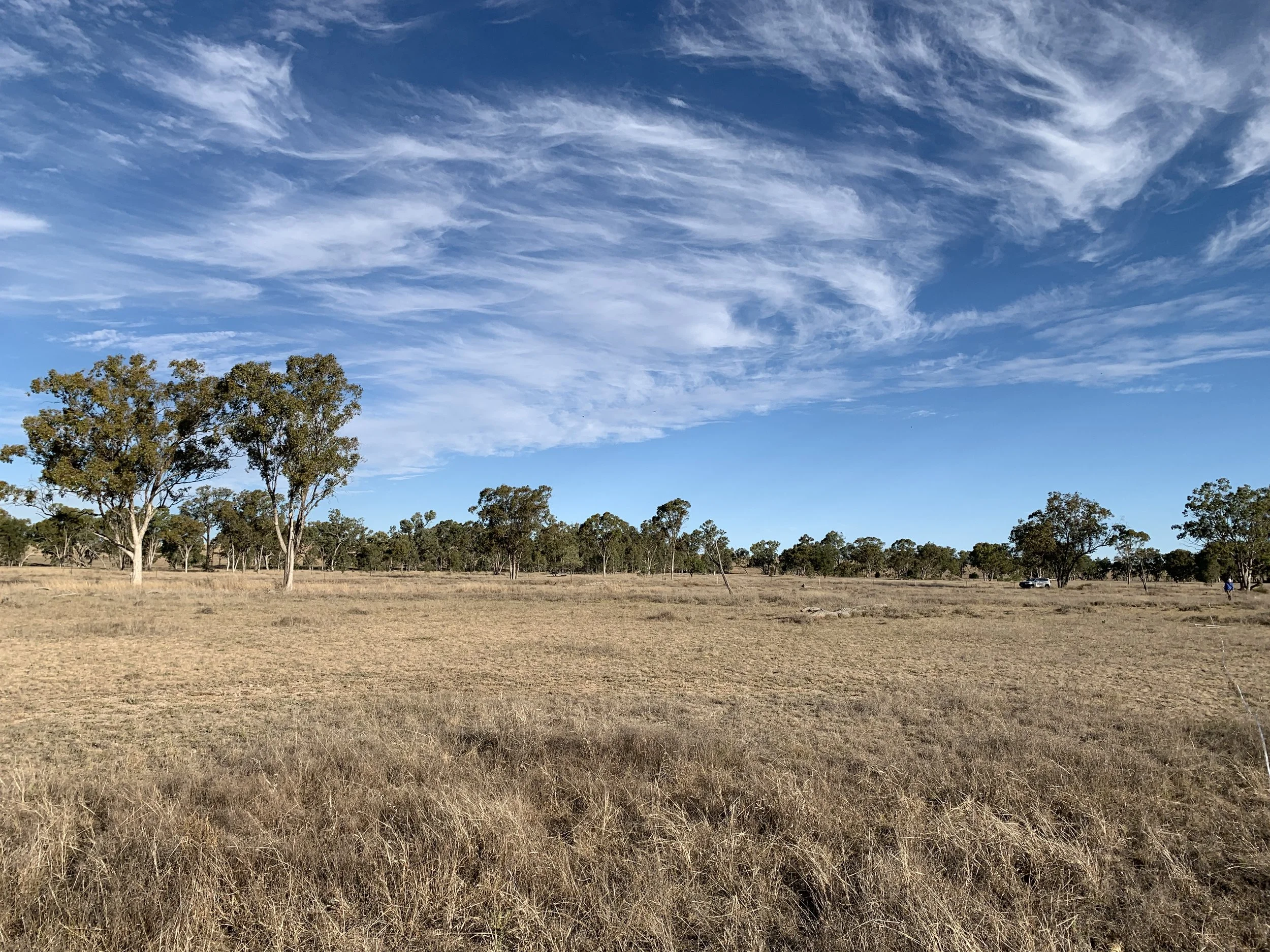
Asset Account snapshot.
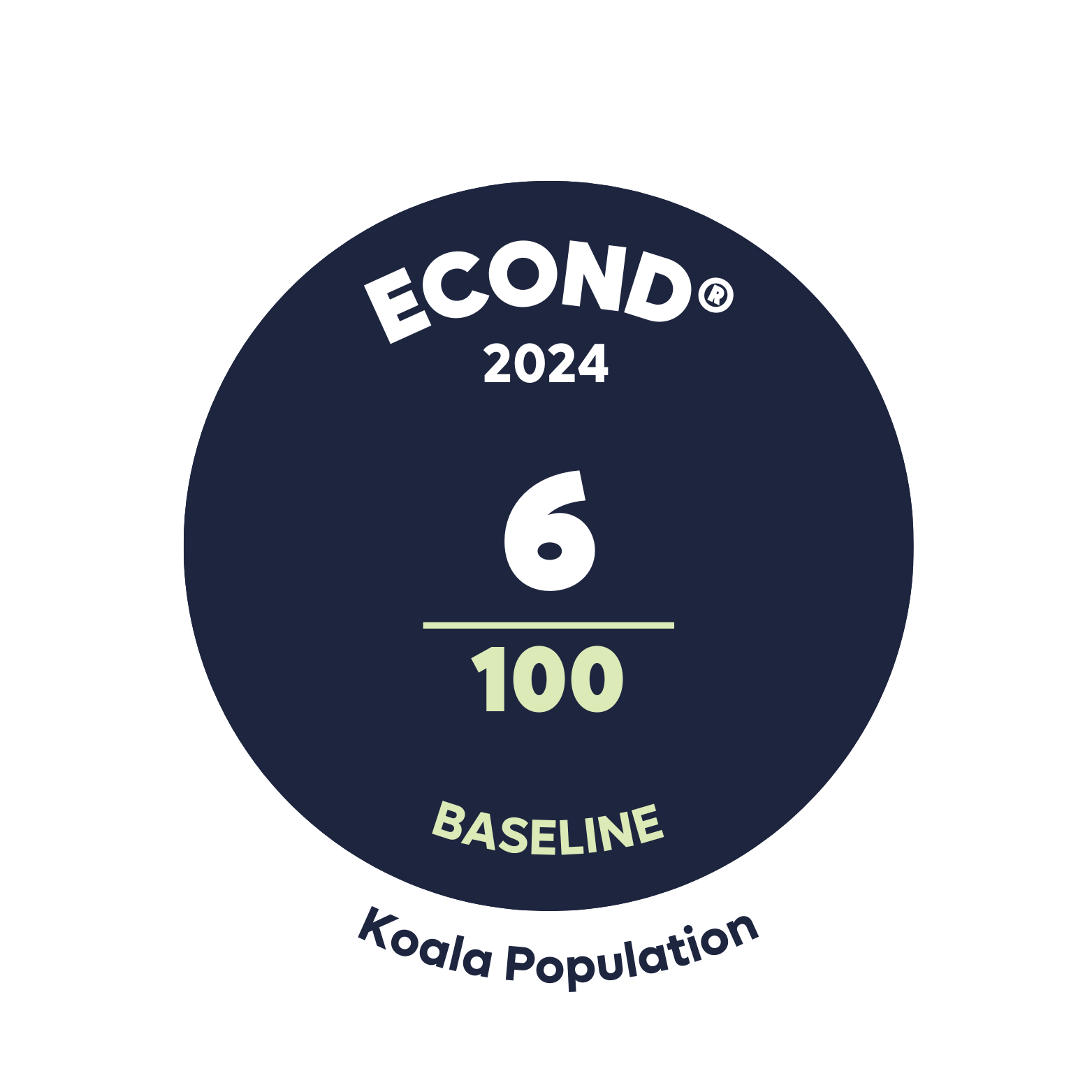
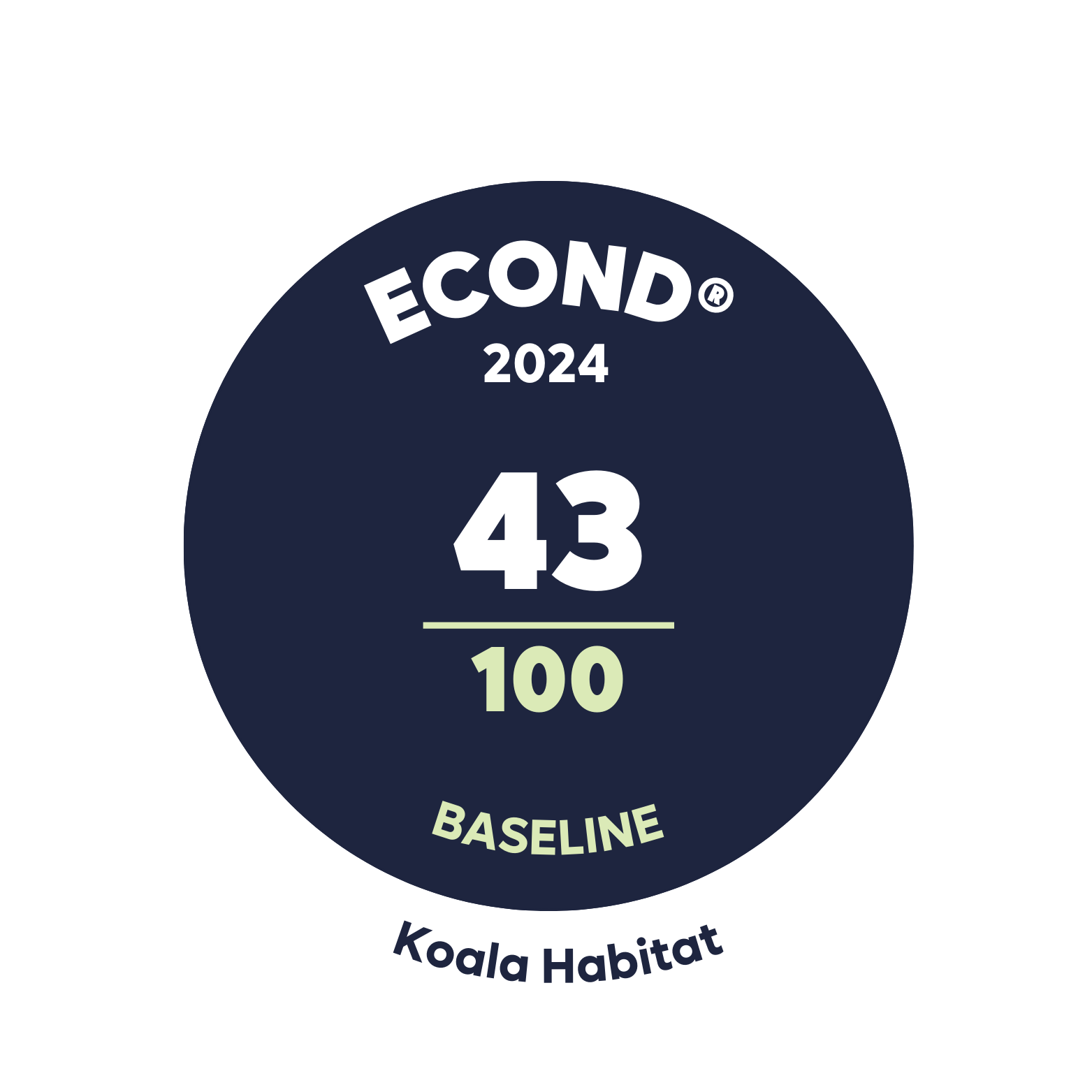

Asset Account Econd® summary.
Asset Account statement.
-
28 January 2025 - Registration Date
-
02 March 2026 - Certification Date
Significant outcomes.
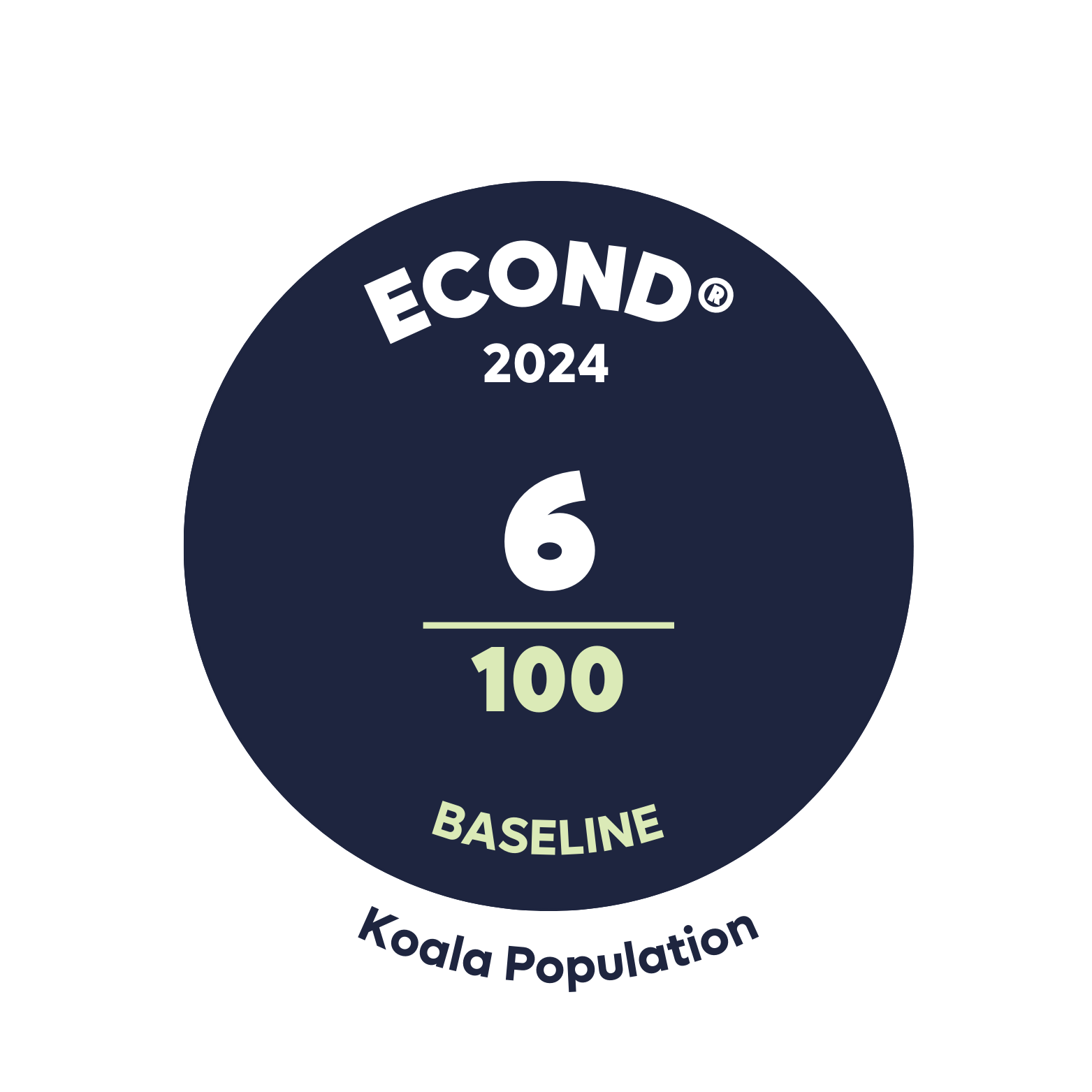
Component A – Koala population
The overall baseline koala population condition (Component A) for the Koala Asset Account has an Econd® of 6. This is a low Econd® considering at least three individual koalas have been observed within the Asset Account. There were also widespread signs of presence recorded during both Component A SAT surveys and the supplementary field investigation (Ecoteam Scientific, 2024).
An interrogation of the raw data, the ICS and the sub-asset Econds® indicates the following factors are the main drivers of the low overall Econd®:
The SAT survey includes searching the next closest (up to) 29 trees to the ‘start tree’. Many of the remnant condition samples, especially AU_1, had a high density of white cypress pine. White cypress pine is not a food tree species (noting it is potentially a shelter tree) and scat was generally not found under this species. The quantity of trees searched (1 to 30 trees) contributes to the ICS, and the high number of white cypress pine is negatively impacting the ICS
The greatest number of SAT surveys from which koala scats were recorded were in AUs 2a and 2b. This AU supports one of the favoured food tree species in the region (E. camaldulensis) (Ecoteam Scientific 2024). The component RE with E. camaldulensis (11.3.25) likely has the greatest carrying capacity of the REs in the Asset Account due to its association with relatively higher productivity riparian zones - a notion supported by the supplementary survey data results recorded by Ecoteam Scientific (2024). While AUs 2a and 2b have the greatest carrying capacity, they contribute the least to the areas of the Asset with woody vegetation. As the Econd® is area-weighted, the raw Econd® for AUs 2a (Econd® 34) and 2b (Econd® 21) contribute less than 5% of the total area-weighted Koala Population Asset Econd®.
The majority (66%) of the Asset Account is composed of pre-clear AUs (cleared), and at many of the randomly selected sample sites, there were no koala food trees (or no trees at all) from which to assign as a SAT survey centre tree, and no SAT survey could be completed. These survey sites received an ICS of zero, and the areas contributing the most to the total area-weighted Koala Population Asset Econd® (1c, 2c, 3c) have a raw Econd® of zero.
Despite the low overall Econd®, the results of the SAT surveys undertaken per the F-04 Method to produce the Component A Econd, and supplementary surveys (Ecoteam Scientific 2024) indicate the remnant and regrowth/regenerating condition AUs are generally occupied koala habitat. Ecoteam Scientific recorded at least three individual koalas in these parts of the Koala Asset Account Area in October 2024, while 2rog (2024) detected a koala in remnant woodland in October 2023.
These areas likely hold the greatest potential for positive management outcomes, including an increase in koala occupancy via habitat enhancement and threat abatement. Connection and augmentation of current habitat associated with these areas is possible and will be a focus of planned restoration within the Koala Asset Account Area. Ongoing tracking of the Component A Econd will help to establish whether and to what extent management of habitat is correlating with changes in Econd.
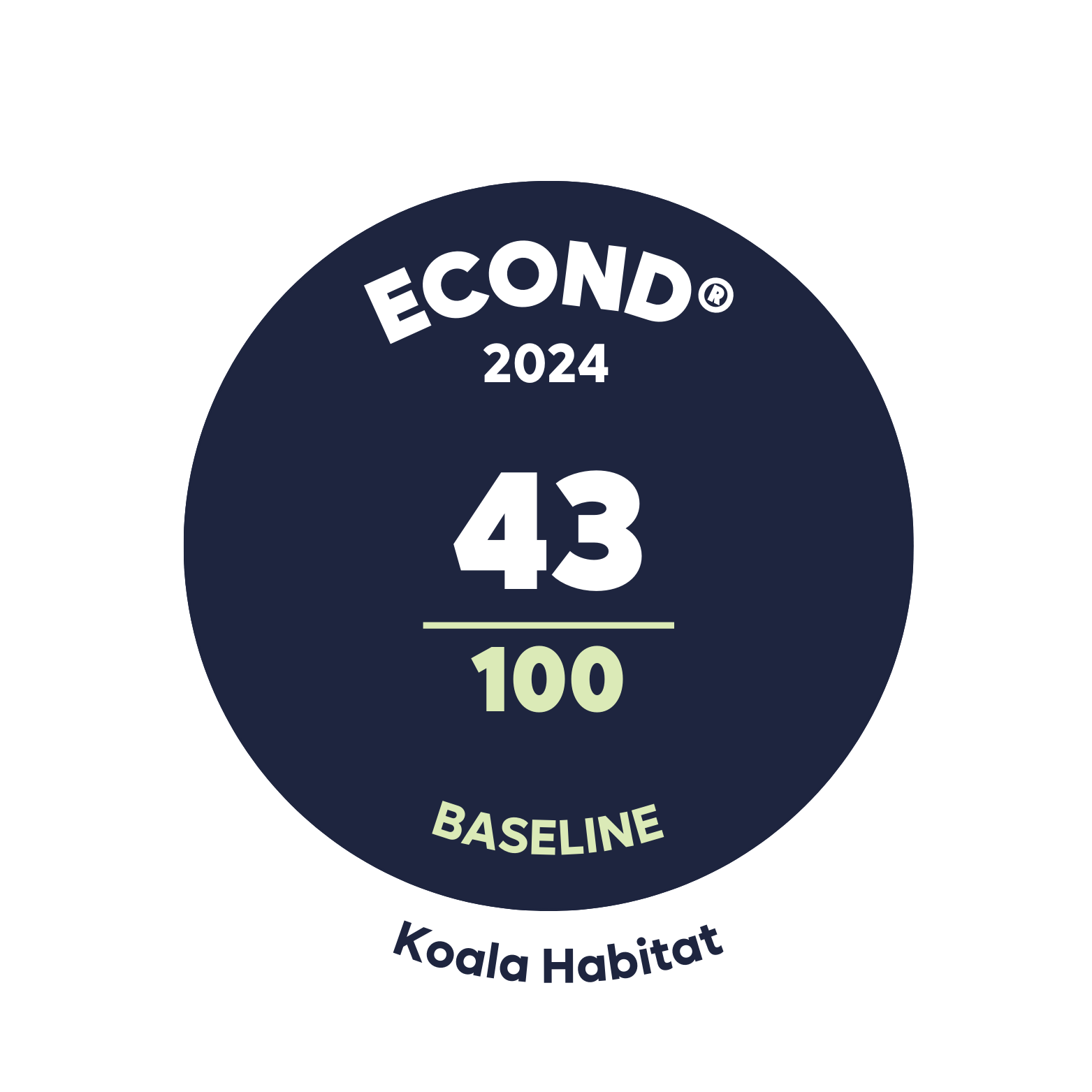
Component B – Koala habitat
The overall baseline koala habitat quality condition (Component B) for the Koala Asset Account has an Econd® of 43. The majority of the Asset Account (66% - i.e. pre-clear (cleared) condition AUs) is largely lacking key koala habitat attributes (e.g. mature feed trees). AU1c, 2c and AU3c cover 66 % of the Koala Asset Account and have raw Econd® scores of 41, 22, 34 respectively. Applying an area-weighting however, reduces the Econds® to 24, 19 and 17. The smaller areas of remnant AUs (1a, 2a, 3a) have raw Econds® of 66, 66 and 65, reduced to 8, 7, and 9 with area-weighting applied.
While AUs 1c, 2c, and 3c are predominantly cleared, the total ICSs for the AUs are kept relatively high due to:
High score for a lack of non-native shrubs, contributing 13% to total ICS
High score for Landscape ‘Extent’, contributing 7% to total ICS
High score for not having close proximity to sealed roads or urban areas (combined score contributes 13% to total ICS)
These ‘relatively high-scoring’ indicators are suggestive of a good foundation from which to conduct habitat management and enhancement at targeted areas of the Koala Asset Account. The AU with the greatest scope for improvement is 2c. AU_2c is located along the higher order waterways within the northern and central portions of the Koala Asset Account. This AU contributes 26% to the Asset area but currently has an average ICS of zero for the site-based habitat quality (i.e., food tree species richness, large trees, food tree age structure, and food tree recruitment). This low ICS is likely an indication of an area that has been historically valuable for livestock and more intensively cleared and grazed. Management of grazing pressure will be key to improving environmental condition of the Koala Asset Account and deliver co-benefits for the other Asset Accounts established on the property (i.e., native vegetation and woodland birds).
Non-native predators retain the same score across all AUs, with a relatively low impact value. However, this element is highly weighted which will ensure future management of non-native predators shows clearly in the overall Econd score.
Tracking of environmental condition through future monitoring as per the F-04 Method will be instructive for QIC’s ongoing and adaptive management of the Asset Account. For example, if 29 of 30 trees searched were white cypress, a lower potential ICS would be expected than if searching 30 E. camaldulensis. Within the constraints of the soils asset and the associated soil carbon project’s grazing requirements
Limitations & disclosures.
Under-sampling
A limitation associated with the building of this Asset Account is the under sampling of one AU (2c). This will be rectified at the next reporting period, with one additional 2c sample to be collected during the next survey campaign. However, collecting data from one additional point, in an AU with very little variation, is unlikely to greatly influence the AU ICS, and the ICS is considered reflective of the AU and appropriate to use in the calculation of the Econd. This is exemplified in Section 4.5.1, above.
Non-native predator camera settings
Due to battery failure, only five nights of camera trapping survey was completed at the only camera trap sample in AU_2b. This represents an under sampling of AU_2b. This shortened recording period is considered to have minimal impact on the Econd® for the following reasons:
The number of successful camera recording nights across all samples are summed (i.e., TN, total nights), and one overall non-native predator indicator score is calculated for the Asset, not individual AUs
The one overall non-native predator indicator score, is used in the calculation of each AU indicator score
The five successful AU_2b recording nights can still be used
Wild dogs, pigs, cats and pigs have large home ranges and the F-04 Method sampling design, for Assets with a many of small AUs and AUs composed of multiple small polygons, likely results in multiple captures of the same individual, overinflating feral predator activity results.
Camera trapping for non-native predators is required bi-annually - an additional survey was undertaken in May 2025, and the data from this data collection period will be incorporated into future updates to the Technical Report.
SAT surveys
At many of the survey sites for the cleared AUs (1c, 2c, 3c) there were no trees over 10cm diameter at breast (dbh) to be used for the Spot Assessment Technique (SAT) surveys and no SAT sampling could be undertaken at these locations.
Environmental markets.

Australian Carbon Credit Unit (ACCU) Scheme project, registered with the Australian Clean Energy Regulator. More information can be found here:
Last update: 03 March 2026



Environmental Account.
Learn more about the Environmental Account.