


TIA Dairy Research Facility.
Tasmanian Institute of Agriculture, University of Tasmania.
Vegetation Environmental Asset Account.
Environmental Account ID: AU00105
Account Holder: Tasmanian Institute of Agriculture, University of Tasmania
Purpose: Measure baseline condition of native vegetation to inform sustainable land management and communicate environmental outcomes to key stakeholders
Current land use: Dairy farm
Environmental Asset: Vegetation - Native
Asset Account ID: AU00105V1
Registration date: 24 June 2025
Baseline Certification date: 15 October 2026
Certification pathway: AfN-Verified
Accredited Expert/s: Matthew Taylor, Siobhan de Little
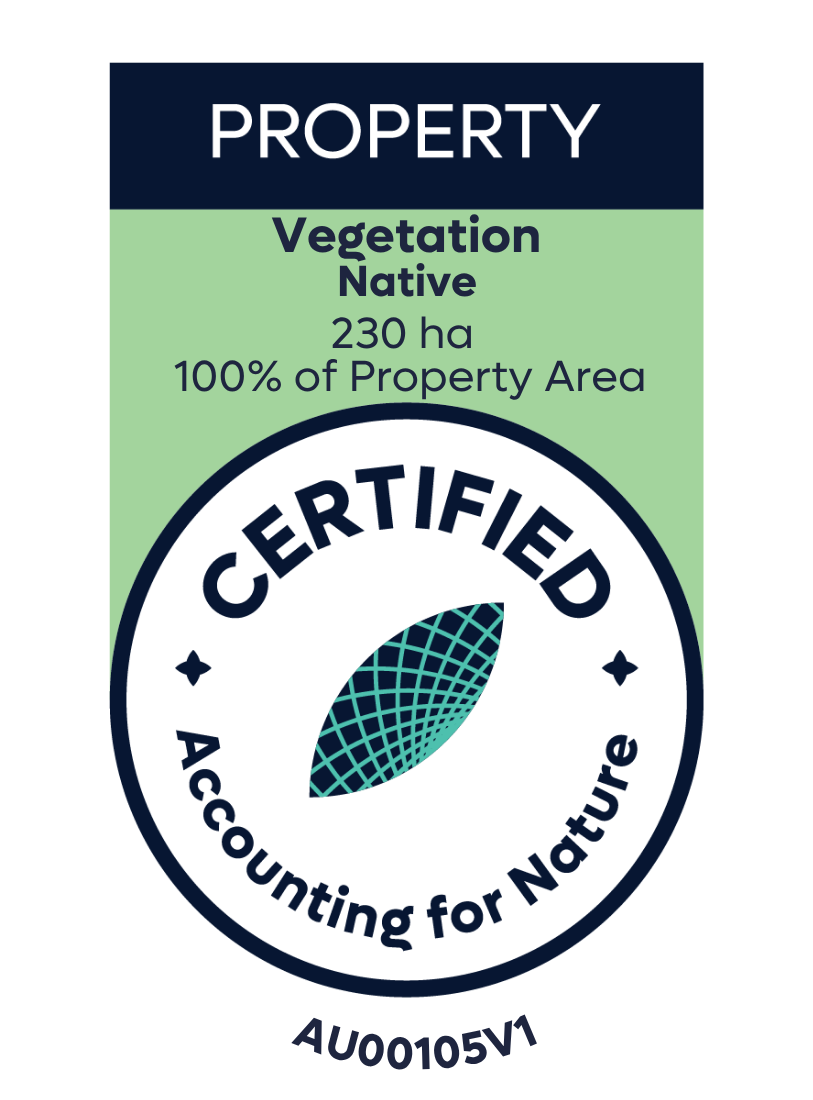
Asset Account area: 230 ha (100% of property area)
Method: AfN-METHOD-V-11
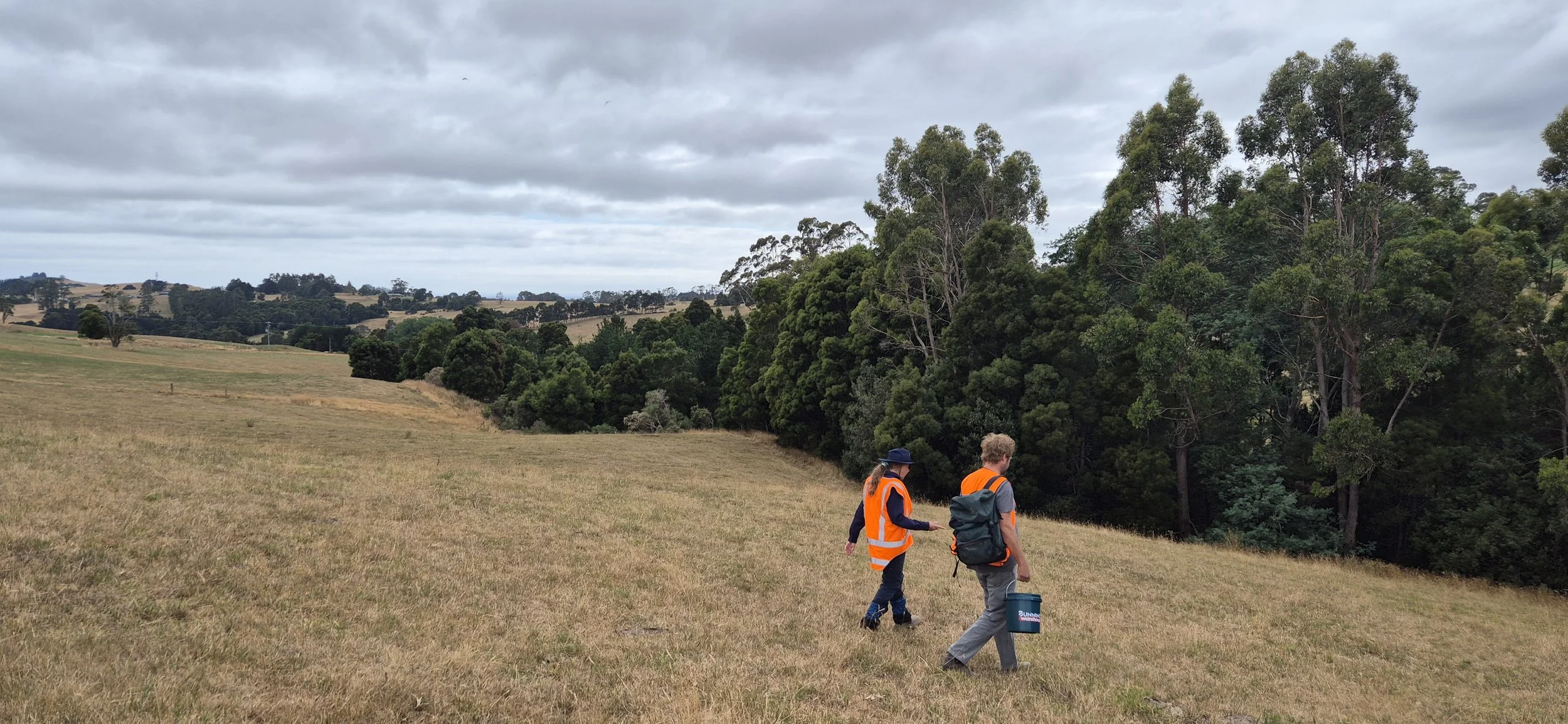
Environmental Asset Account snapshot.
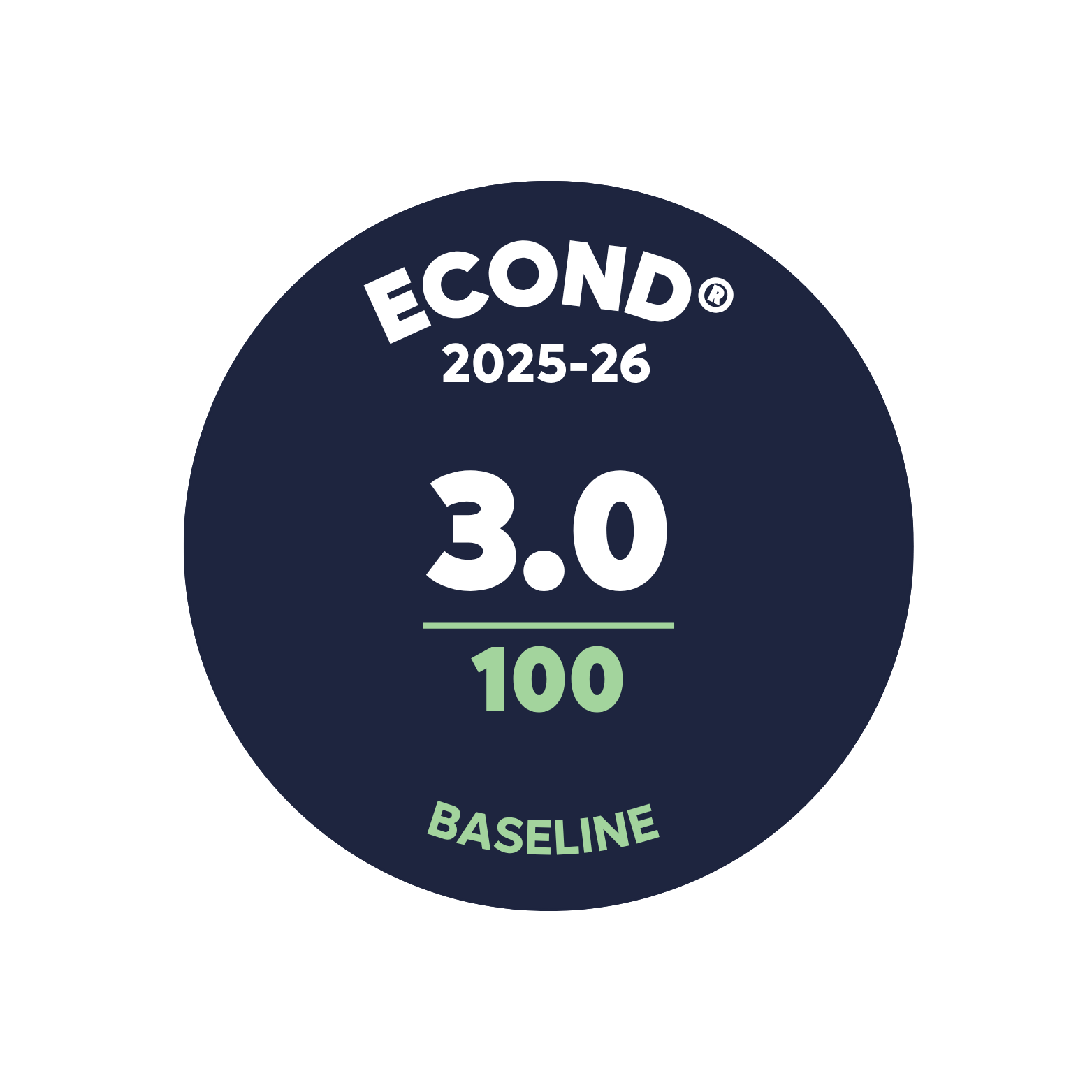

Environmental Asset Account Econd® summary.
Environmental Asset Account statement.
-
24 June 2025 - Registration Date
-
15 October 2026 - Certification Date
Significant outcomes.
Native vegetation extends over 11% of the Asset Account area. Under the Accounting for Nature® Framework, the Econd® score for the Native Vegetation Asset Account is constrained by the proportional extent of native vegetation. To assess the Native Vegetation Asset Account Econd® scores in context, it should be noted that the maximum potential score based on the current extent of native vegetation is an Econd® of 11, which could only be achieved if all remnant vegetation were assessed as being in reference or near-reference condition.
Native vegetation has an Econd® of 3.0. This result reflects both the limited extent of remnant vegetation across the property and the condition of the existing patches, and the extent of historical clearing for agriculture.
Further examination of the condition of remnant native vegetation assessment units provides a better understanding of the condition of remnant native vegetation on the TDRF:
Remnant non-eucalypt forest and woodland recorded an Econd® of 30.3. Higher Indicator Condition Scores were observed for litter cover, understorey composition and canopy cover, indicating retention of structural attributes in several patches. Lower Indicator Condition Scores were observed for weed cover, recruitment and neighbourhood context, reflecting edge effects, fragmentation and limited regeneration in some areas.
Remnant wet eucalypt forest and woodland recorded an Econd® of 30.7. Higher Indicator Condition Scores were observed for large trees, litter, logs and patch size, indicating persistence of key structural habitat features. Lower Indicator Condition Scores were observed for recruitment and neighbourhood context, consistent with constrained regeneration and landscape fragmentation within an agricultural matrix.
Limitations & disclosures.
Pre-clear vegetation mapping
Pre-clear mapping of native vegetation sub-assets assumed that wet eucalypt forest and woodland occurred across all cleared areas of the TDRF prior to clearing for agriculture. Accurate pre-clear vegetation mapping is not currently available for Tasmania. Acacia melanoxylon forest and woodland on rises occurs as a successional vegetation type following disturbance from land clearing or fire. Based on ecological conditions and the distribution of native vegetation on surrounding properties and nearby nature reserves, there is a high probability that wet eucalyptus-dominated vegetation once occurred across the entire property.
Proximity to Roads
A small number of sites are located within 50 m of internal roads. While these roads are low-traffic farm tracks rather than major infrastructure, proximity to disturbance features may introduce localised edge effects, including altered light availability, weed incursion, minor soil compaction or changes in microhabitat conditions. These potential influences are considered limited in spatial extent and unlikely to materially affect assessment unit–scale Econd® results. However, this proximity represents a minor methodological limitation and has been documented for transparency.
Sampling Timing
Vegetation surveys were undertaken during the summer 2025 field program, with additional surveys completed in March 2026. Sampling across two survey periods represents a minor limitation, as seasonal variation may influence the detectability and abundance of some understorey species, particularly short-lived herbs, grasses and geophytes. Consequently, minor differences in understorey composition and species richness may occur between survey periods. However, both surveys were undertaken during the active growing season, when vegetation communities were readily identifiable. Canopy structure, overstorey composition and the majority of condition indicators are not expected to have been materially affected by the difference in survey timing. Overall, the influence of survey timing on the Environmental Account is considered minor.
Last update: 15 October 2026



Environmental Account.
Learn more about the Environmental Account. Environmental Accounts can have one or more Asset Accounts.